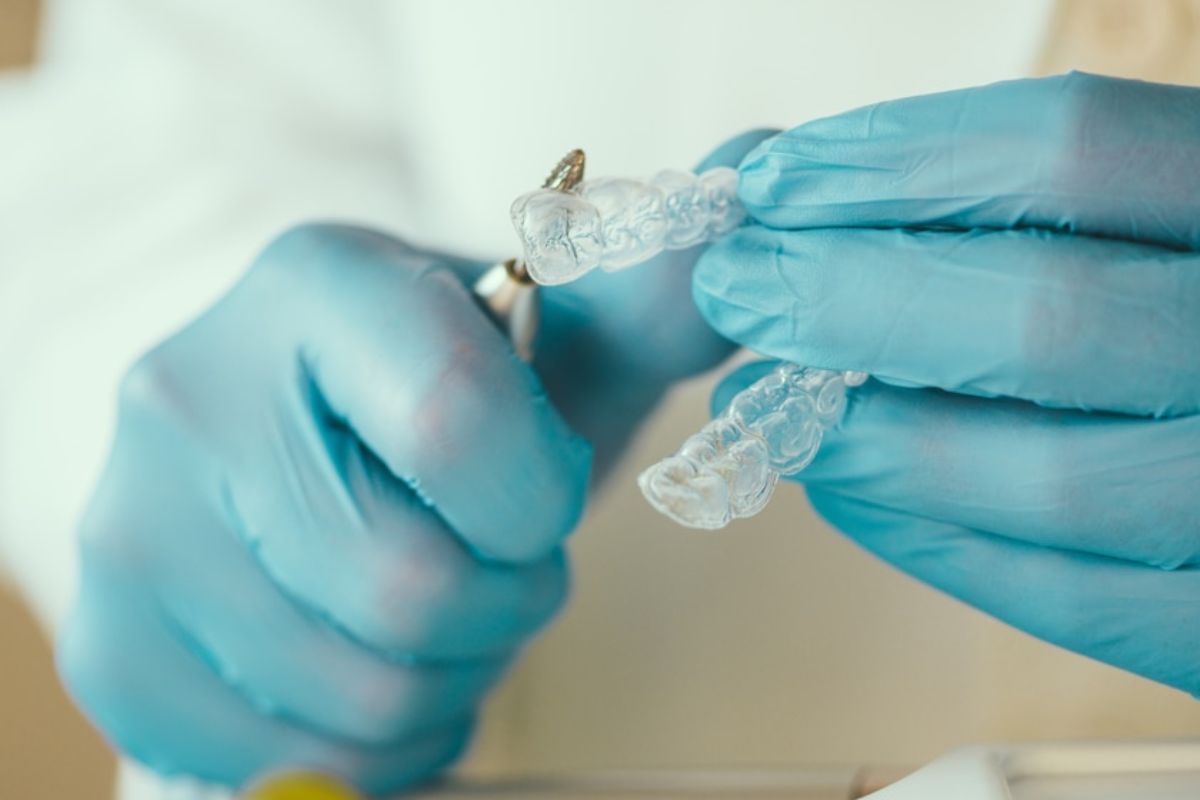


Invisalign has become a popular choice for people seeking discreet, effective orthodontic treatment. What sets Invisalign apart is its ability to customize aligners specifically for each patient. Advanced imaging technology makes this high level of precision possible when straightening teeth. Created using modern digital tools, Invisalign clear aligners are tailored to fit teeth perfectly, ensuring faster and more accurate results. In this blog, we’ll explore how 3D technology is crucial in developing a personalized Invisalign treatment that works for you.
How Invisalign Treatment Works?
Invisalign uses a series of custom-made, clear aligners to gradually shift your teeth into proper alignment. Before moving on to the subsequent set of aligners, each set is worn for roughly two weeks. Over time, this process gently straightens your teeth without needing metal brackets or wires. The aligners are removable, making it easy to eat, brush, and floss during treatment. Unlike traditional braces, Invisalign is nearly invisible, allowing you to achieve a straighter smile without anyone noticing.
The Role of 3D Scanning in Invisalign Treatment:
Three-dimensional technology is at the heart of Invisalign treatment, starting with the initial consultation. Instead of using traditional impressions, Invisalign uses a cutting-edge 3D scanner to create a detailed digital model of your teeth. This scanner captures high-resolution images, providing an accurate representation of your teeth and gums in minutes.
The scanning process is not only more comfortable than traditional methods but also far more precise. Digital dental models created through this technology are highly detailed, allowing for greater accuracy when designing your custom aligners. The scanner eliminates the need for messy dental molds, enabling better-fitting aligners from the start of orthodontic care.
Designing a Customized Treatment Plan:
Once your dental scan is complete, the next step is to create a customized treatment plan. Invisalign’s planning software is used to design the movement of your teeth throughout the treatment. This software allows your dentist or orthodontist to map out how your teeth will shift over time. The plan is fully visualized, showing how each set of aligners will move your teeth closer to their final positions.
This 3D treatment plan allows for a high degree of personalization. It considers the unique shape and alignment of your teeth, ensuring that your Invisalign treatment is as efficient and effective as possible. Before treatment, you can view a virtual preview of your new smile, clarifying the process and outcome.
Custom Aligner Fabrication with 3D Printing:
After your treatment plan is finalized, three-dimensional technology takes center stage in creating your custom aligners. Invisalign uses advanced imaging technology to ensure each aligner fits perfectly and follows the precise movements in your treatment plan. This method allows for exceptional accuracy, which means fewer adjustments and faster results compared to traditional braces.
Each aligner is made from a special thermoplastic material that is both strong and comfortable. It is designed to apply the right amount of pressure to specific teeth, guiding them into alignment over time. Custom-made aligners for overbite correction cause less irritation or discomfort, making the orthodontic treatment more comfortable.
Treatment Tracking with Three-Dimensional Modeling:
One significant benefit of using 3D technology in Invisalign treatment is the ability to track progress accurately. Your dentist uses three-dimensional scans and software to monitor how well your teeth are shifting according to plan.
This tracking capability ensures that any necessary adjustments can be made promptly, helping to keep your treatment on track. If your teeth aren’t moving as expected, adjustments can be made to the aligners to correct the course. This real-time monitoring ensures that your Invisalign treatment stays on schedule, leading to shorter overall treatment times than traditional braces.
The Benefits of 3D Technology in Invisalign:
The integration of three-dimensional imaging technology in Invisalign treatment offers several advantages that set it apart from traditional orthodontics:
Precision: 3D technology allows for highly accurate scans and aligner production, ensuring a perfect fit for your teeth. This precision reduces the need for adjustments, resulting in a more effective and streamlined Invisalign process.
Comfort: Since each aligner is custom-made using detailed 3D scans, they fit your teeth perfectly and reduce discomfort. The smooth, precise fit minimizes irritation to your gums and cheeks, offering a more comfortable orthodontic experience.
Visualization: With three-dimensional modeling, you can see a digital preview of your treatment results before it begins. This visual roadmap allows you to understand how your teeth will shift over time and what your final smile will look like.
Efficiency: 3D printing technology speeds up the production of aligners, ensuring timely delivery and fewer delays. Its accuracy also minimizes the need for mid-treatment adjustments, often leading to shorter overall treatment times than traditional braces.
Convenience: Digital scans replace the need for traditional molds, which can be uncomfortable and messy. The use of 3D technology ensures a quicker, easier, and more patient-friendly process, improving your overall treatment experience from start to finish.
From the initial scan to creating custom aligners and real-time progress tracking, Invisalign ensures a smooth, precise, and personalized experience. Thanks to the advancements in 3D scanning, printing, and treatment planning, your dream smile is created in real life. If you’re considering Invisalign in Portland, consult with your cosmetic dentist to make your journey to straighter teeth more enjoyable and effective.