

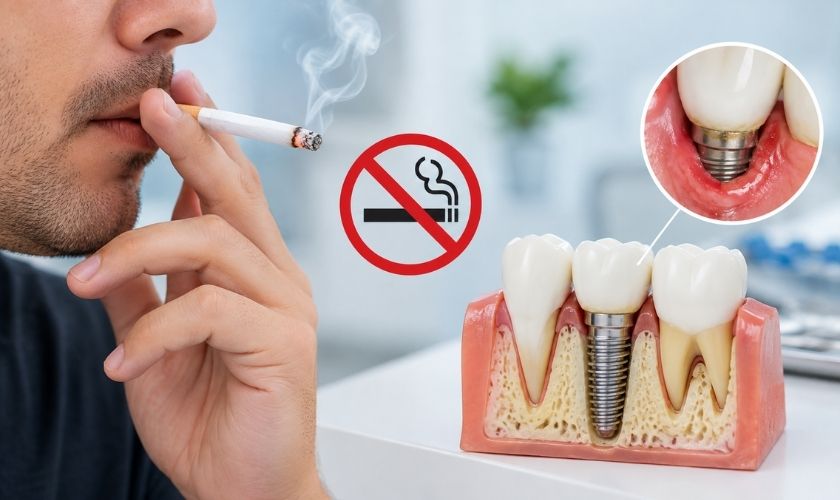
Dental implants are designed to replace missing teeth and restore everyday function. However, certain habits can affect how well an implant heals and remains stable. Smoking is one of the most important factors to discuss before and after implant treatment because tobacco use can interfere with healing and increase the risk of implant-related complications.
Recent research continues to find an association between smoking and dental implant failure. A 2024 systematic review and meta-analysis found that smokers had a significantly higher risk of early implant failure than non-smokers.
How Smoking Affects Implant Healing
After an implant is placed, the surrounding jawbone needs to integrate with the implant through a process called osseointegration. This provides the stable foundation needed to support a dental crown or other restoration.
Smoking can interfere with this healing environment. Tobacco exposure can affect blood flow and the tissues surrounding an implant, potentially making it more difficult for the area to heal properly. Research has also associated smoking with increased marginal bone loss and postoperative complications around dental implants.
Smoking May Increase the Risk of Implant Failure
Implant failure can occur when an implant does not successfully integrate with the surrounding bone or later loses stability. Smoking has been consistently identified as a risk factor in research examining implant outcomes.
A 2026 systematic review found that cigarette smokers had reduced implant survival and greater crestal bone loss compared with nonsmokers. The review also reported that peri-implant complications were more common among smokers.
This does not mean every smoker will experience implant failure. Individual risk can depend on factors such as the number of cigarettes used, oral hygiene, existing gum health, bone quality, implant location, and overall treatment circumstances.
The Risk May Increase With Heavier Smoking
The amount a person smokes may also matter. A systematic review and meta-analysis found that implant failure risk increased among people who smoked more than 20 cigarettes per day compared with nonsmokers.
For patients in Portland considering implants, discussing tobacco use openly with a dental professional can help the treatment team understand potential risk factors and develop an appropriate treatment and maintenance plan.
Smoking and Gum Health Around Implants
Dental implants can develop inflammation in the tissues around them. When inflammation progresses, it can contribute to bone loss and threaten implant stability.
Smoking is associated with a greater risk of peri-implant complications and bone loss. Because healthy gums and supporting bone are important for long-term implant function, maintaining excellent oral hygiene and attending recommended dental examinations are especially important for people who use tobacco.
How to Protect Your Dental Implant
If you smoke and are considering a dental implant in Portland, speak with your dental provider before treatment. Depending on your circumstances, your provider may discuss reducing or stopping tobacco use, improving oral hygiene, treating existing gum problems, and following specific instructions during the healing period.
Avoiding tobacco can support a healthier environment for healing. Your dental team can also explain how smoking may affect your individual treatment and what precautions may be appropriate.
Patients considering implant treatment can learn more about their options through City Dental and discuss their oral health needs with a dental professional.
Protecting Your Investment After Implant Treatment
Dental implants require ongoing care even after healing is complete. Brush twice daily, clean between teeth and around the implant as instructed, maintain regular professional cleanings, and report changes such as bleeding, swelling, discomfort, or mobility.
If you have questions about your implant options or smoking-related risks, Contact Us to discuss your concerns. For patients seeking implant care in Portland, visit our dental clinic for an evaluation and personalized guidance.
Frequently Asked Questions
1. Can smoking cause a dental implant to fail?
Smoking is associated with a higher risk of implant failure because tobacco can interfere with healing and contribute to bone loss and inflammation around the implant.
2. Should I stop smoking before getting dental implants?
Stopping smoking before implant treatment may reduce certain risks and support healing. Your dental provider can discuss appropriate timing and recommendations based on your circumstances.
3. Can I smoke after getting a dental implant?
Smoking during the healing period may increase complications and interfere with implant integration. Follow your provider’s specific post-treatment instructions regarding tobacco use.
4. Does smoking affect the bone around dental implants?
Yes. Research has associated smoking with increased crestal or marginal bone loss around implants, which can affect the tissues supporting long-term implant stability.
5. Are smokers automatically unable to get dental implants?
Smoking is not necessarily an absolute contraindication to implant treatment. However, it is an important risk factor that should be discussed during treatment planning and evaluation.
6. Does the number of cigarettes smoked affect implant risk?
Research suggests heavier smoking can be associated with greater implant failure risk. Individual outcomes vary, so tobacco use should be discussed during your dental implant consultation.
7. Can good oral hygiene reduce smoking-related implant risks?
Good oral hygiene helps maintain healthy tissues around an implant, but it does not completely eliminate risks associated with smoking. Regular dental care remains important for implant maintenance.