


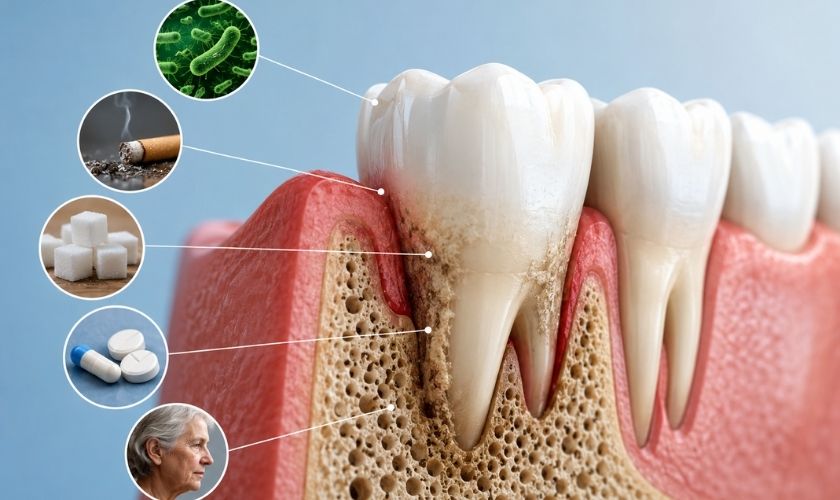
When people talk about “bone loss in teeth,” they usually mean the loss of bone that supports and anchors the teeth, particularly the alveolar bone around the roots. This bone is essential for keeping teeth stable. When it becomes damaged or reduced, teeth can become loose, shift position, or eventually be lost.
Bone loss can develop gradually and may not cause obvious symptoms in its early stages. Understanding the causes and warning signs can help you protect your supporting bone and overall oral health.
The Most Common Cause: Gum Disease
One of the leading causes of bone loss around teeth is periodontal disease, also known as advanced gum disease. It often begins when plaque accumulates around the teeth. If plaque is not removed, it can harden into tartar and contribute to inflammation and infection.
As periodontal disease progresses, the inflammation can extend below the gumline and affect the tissues and bone supporting the teeth. Over time, the supporting bone may be destroyed, creating deeper pockets around the teeth and reducing their stability.
Periodontal disease is also the most common cause of tooth loss among adults.
Poor Oral Hygiene
Inadequate brushing and cleaning between the teeth allows bacterial plaque to remain along the gumline. Persistent plaque can irritate the gums and contribute to gingivitis. Without appropriate care, this inflammation may progress to periodontitis.
Daily brushing with fluoride toothpaste and cleaning between the teeth can help control plaque. Professional dental cleanings are also important because hardened tartar cannot be removed effectively with ordinary brushing and flossing.
Smoking and Tobacco Use
Tobacco use is an important risk factor for gum disease and can make periodontal problems more difficult to manage. Smoking can also interfere with healing, which may affect the outcome of periodontal treatment.
If you use tobacco, discussing ways to reduce or quit with a healthcare professional can benefit both your oral and general health.
Diabetes and Other Health Factors
Certain health conditions can increase the risk of developing gum disease and associated bone damage. Diabetes, for example, is recognized as a risk factor for periodontal disease. Genetics, age, hormonal changes, certain illnesses, and some medications may also influence susceptibility.
This means that bone loss isn’t always caused by oral hygiene alone. Your overall health and individual risk factors can also play a role.
Tooth Loss Can Lead to Bone Loss
Bone needs stimulation to maintain its structure. When a tooth is removed, the surrounding jawbone no longer receives the same stimulation from normal chewing forces. As a result, the bone in that area can gradually shrink.
This is one reason dentists consider the long-term effects of missing teeth when discussing tooth replacement. Depending on the situation, options such as dental implants may help restore function and provide stimulation to the surrounding bone.
Dental Trauma and Infection
A significant injury to a tooth or its surrounding structures can sometimes affect the supporting bone. Likewise, an untreated dental infection that spreads beyond the tooth can damage nearby tissues.
Severe tooth decay itself primarily damages the tooth rather than directly causing periodontal bone loss, but an advanced infection can create complications that affect surrounding structures. Untreated tooth decay can eventually result in infection and tooth loss.
Signs You May Have Bone Loss
Bone loss can sometimes progress without noticeable discomfort, which makes regular dental examinations important. Possible warning signs include:
- Loose or shifting teeth
- Gums that bleed easily
- Persistent bad breath
- Receding gums
- Teeth appearing longer than before
- Changes in how your teeth fit together
- Pain or difficulty when chewing
- Increasing tooth sensitivity
Dentists may use periodontal measurements and dental X-rays to evaluate the health of the tissues and bone surrounding your teeth. X-rays can help reveal bone loss that isn’t visible during a routine visual examination.
How Is Bone Loss Treated?
Treatment depends on the cause and severity of the bone loss. If periodontal disease is responsible, treatment may involve professional cleaning, scaling and root planing, improved home care, medication in selected cases, or periodontal surgery for advanced disease.
The primary goal is to control infection and prevent additional damage. Existing bone loss cannot always be completely restored, but treating the underlying condition can help protect the remaining supporting structures.
At City Dental, Dr. Rusty Crofts provides general, cosmetic, and restorative dental care with personalized treatment planning.
He focuses on helping patients maintain healthy teeth and supporting structures through comprehensive, patient-centered care.
If you notice loose teeth, bleeding gums, or changes around your teeth, Contact Us to discuss your symptoms and determine whether an examination is appropriate.
Protecting Your Supporting Bone
Preventing periodontal disease is one of the most effective ways to protect the bone around your teeth. Brush twice daily with fluoride toothpaste, clean between your teeth every day, avoid tobacco, manage health conditions such as diabetes, and maintain regular dental examinations and professional cleanings.
Early gum disease can often be managed more effectively than advanced periodontal disease. Paying attention to changes in your gums or teeth can therefore make an important difference. If you need an evaluation of your gum and bone health, visit our dental office for a professional assessment.
Frequently Asked Questions
- Can bone loss around teeth be reversed?
Bone lost from periodontal disease does not always naturally grow back. However, treating the infection and controlling inflammation can prevent further destruction. In selected cases, regenerative procedures may help rebuild some lost bone.
- Does gum disease always cause bone loss?
No. Early gum disease, or gingivitis, primarily affects the gums and does not normally cause the bone destruction associated with periodontitis. Untreated gingivitis can progress, making professional evaluation important.
- Can a loose tooth mean bone loss?
A loose tooth can be a sign of reduced supporting bone, particularly when periodontal disease is present. Trauma, infection, or other conditions can also cause looseness, so an examination is needed to identify the cause.
- Can brushing stop bone loss?
Good brushing helps control plaque and supports healthier gums, but established bone loss requires professional evaluation. Brushing, interdental cleaning, and regular cleanings can help prevent additional periodontal damage.
- Does smoking make bone loss worse?
Smoking is a major risk factor for periodontal disease and can interfere with healing. Tobacco use may therefore increase the likelihood of periodontal problems and make treatment less successful in affected patients.
- Can missing teeth cause jawbone loss?
Yes. After a tooth is lost, the surrounding bone can gradually shrink because it no longer receives normal stimulation from the tooth. The amount and rate of bone loss vary between individuals.
- How is bone loss detected?
A dentist may examine the gums, measure periodontal pockets, assess tooth stability, and use dental X-rays. These evaluations help determine whether supporting bone has been lost and how extensive the damage may be.