


Dental implants are widely celebrated as the gold standard for replacing missing teeth. Boasting an impressive national success rate of 95% to 98%, they offer an unparalleled solution for restoring oral function, preserving jawbone structure, and recreating a natural-looking smile. However, despite their exceptional reliability, implants are not entirely immune to complications. On rare occasions, an implant can loosen, fail to integrate properly with the surrounding tissue, or become infected years after a successful placement.
Understanding why this tooth replacement treatment failure occurs, and what proactive steps you can take to prevent it, is essential for anyone considering or currently living with implants. At City Dental, our lead practitioners, Dr. Rusty Crofts and Dr. Yu Han, bring decades of combined clinical expertise to providing high-quality, long-lasting restorative care to our local community. As a premier dental implant treatment specialist, our goal is to empower patients with transparent, evidence-based guidance so their smiles remain healthy and functional for a lifetime.
Understanding Dental Implant Success vs. Failure
To understand why an implant might fail, it helps to review how the treatment works. Unlike traditional bridges or removable dentures, an implant acts as an artificial tooth root. Crafted from biocompatible titanium or zirconia, the implant post is surgically inserted directly into the jawbone. Over a period of several months, a natural biological process called osseointegration occurs, during which the surrounding bone fuses directly with the implant surface.
When osseointegration succeeds, the implant provides a stable foundation for a custom crown, bridge, or full-arch restoration. Implant failure occurs when this bond fails to form initially or deteriorates over time due to inflammation, mechanical pressure, or systemic health issues. Clinical failure generally falls into two distinct categories:
- Early Implant Failure: Occurs within the first few weeks or months following surgical placement. This type of failure typically stems from poor osseointegration, infection during early healing, micro-movements caused by immediate pressure, or insufficient initial bone density.
- Late Implant Failure: Takes place months or even years after the implant has fully healed and been fitted with a permanent restoration. Late failures are most frequently caused by chronic bacterial infection, mechanical overload, or changes in overall systemic health.
Top Reasons Why Implants May Fail
While failure is uncommon, visiting a trusted dental office in Portland helps in identifying the primary risk factors and enables patients and clinicians to take preventive action early.
Peri-Implantitis and Poor Oral Hygiene
The leading cause is peri-implantitis, an inflammatory condition similar to severe gum disease (periodontitis). When bacterial plaque builds up around the gumline of an implant, it causes localized inflammation known as peri-implant mucositis. If left untreated, the inflammation progresses deeper into the surrounding bone structure, resulting in irreversible bone loss and eventual implant mobility.
Unlike natural teeth, implants do not possess a periodontal ligament, making surrounding tissues slightly more vulnerable to rapid bacterial invasion when oral hygiene lapses. Daily brushing, flossing, and professional cleanings are critical to prevent bacteria from taking root.
Inadequate Jawbone Density
For an implant post to remain anchored, it requires a robust volume of high-quality jawbone. When a natural tooth is lost, the surrounding jawbone begins to resorb (shrink) over time due to a lack of mechanical stimulation. If an implant is placed into bone that lacks sufficient height, width, or density without prior bone grafting, the implant cannot achieve initial stability. Without proper anchorage, the forces of everyday chewing will cause the implant post to loosen.
Tobacco Use and Smoking
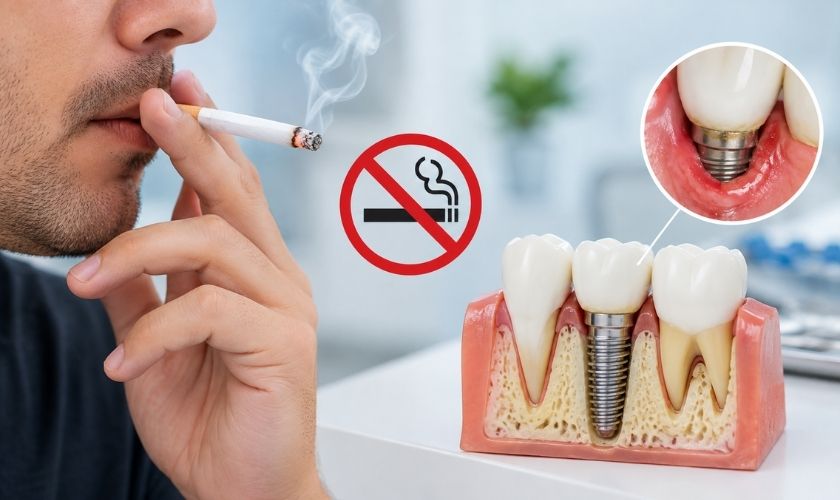
Smoking and nicotine consumption significantly compromise the body’s natural healing abilities. Nicotine constricts blood vessels, restricting the flow of oxygen and essential nutrients to the oral tissues following surgery. Research shows that smokers experience significantly higher rates of implant failure compared to non-smokers. Furthermore, smoking impairs immune function, creating an environment where peri-implantitis can thrive.
Uncontrolled Systemic Health Conditions
Your overall body health directly influences how well your jawbone heals around the implant. Systemic conditions such as uncontrolled Type 2 diabetes, autoimmune disorders, and bone disorders (like osteoporosis) can delay healing and impede bone integration. Certain medications, particularly high-dose bisphosphonates used for cancer treatments or bone density management, may also interfere with bone remodeling and increase failure risks.
Surgical Inexperience and Suboptimal Placement
The precision with which an implant is placed plays a pivotal role in its ultimate longevity. Inaccurate angle placement, overheating the jawbone during drilling, or placing an implant too close to adjacent nerve channels or sinus cavities can compromise the healing process. Consulting a highly qualified dental implant treatment specialist ensures that your treatment plan utilizes advanced 3D CBCT digital imaging to map out sub-millimeter surgical precision.
Bruxism (Teeth Grinding) and Occlusal Overload
Continuous, excessive pressure on an implant can lead to mechanical failure or bone loss around the post. Patients who suffer from chronic bruxism (unconscious clenching or grinding of teeth, especially while sleeping) exert immense strain on their dental restorations. Over time, this mechanical overload can loosen internal implant screws, fracture the custom porcelain crown, or break down the bone fusion supporting the post.
Practical Ways to Prevent Implant Failure
Preventing implant failure begins long before the actual surgery and continues throughout the life of the restoration. By taking proactive measures, you can protect your investment and enjoy a lifetime of healthy smiling.
Comprehensive Pre-Surgical Planning
A successful implant journey relies on thorough diagnostics. Before placing an implant, your clinical team should perform a full diagnostic evaluation using 3D digital cone-beam computed tomography (CBCT). This allows us to assess your exact bone volume, map facial nerves, and determine whether pre-treatment procedures such as bone grafting or sinus lifts are necessary to build a solid foundation.
Rigorous Oral Hygiene Practices
While implant restorations cannot decay like natural teeth, the surrounding gum tissue requires equal, if not greater, attention. You should brush at least twice a day using a soft-bristled toothbrush or electric brush, and floss daily using non-abrasive dental tape or an interdental brush designed specifically for implants. Water flossers are also exceptional tools for removing trapped food particles around abutments.
Lifestyle Modifications
If you smoke or use tobacco products, quitting or at least refraining for several weeks before and months after surgery dramatically improves your odds of a smooth recovery. Furthermore, maintaining a balanced diet rich in vitamin D and calcium supports strong bone growth during the critical osseointegration phase.
Protective Appliances for Bruxism
If you show signs of nighttime teeth grinding, your dentist can craft a custom-fitted occlusal nightguard. This appliance cushions the forces generated by jaw clenching, distributing pressure evenly across the dental arch and shielding both natural teeth and implants from stress fractures.
Frequently Asked Questions
1. What are the early warning signs of dental implant failure?
Early warning signs include persistent pain or discomfort, localized swelling, red or bleeding gums around the post, difficulty chewing, and noticeable mobility or looseness in the implant crown or fixture. Prompt clinical evaluation is essential.
2. Can a failed dental implant be replaced?
Yes. If an implant fails, your dentist will gently remove the fixture, clean the site, and allow the area to heal. After performing necessary bone grafting to rebuild support, a new implant can usually be placed.
3. How do I clean and care for my dental implants at home?
Clean your dental implants daily by brushing twice with a soft-bristled toothbrush, flossing with specialized implant floss or interdental brushes, and using an alcohol-free antibacterial mouthwash or water flosser to remove lingering plaque and bacteria.
4. Does dental implant surgery hurt during or after the procedure?
The procedure itself is pain-free because local anesthesia or sedation is used. Mild swelling or discomfort following surgery is normal and easily managed with prescribed or over-the-counter pain medications for a few days.
5. How long do dental implants typically last?
With proper oral hygiene, regular professional cleanings, and routine dental checkups, the titanium implant post can last a lifetime. The visible crown atop the implant typically lasts 15 to 20 years before minor wear requiring replacement.
6. Am I a good candidate for dental implants if I have bone loss?
Yes. Even with prior jawbone loss, you can still become an ideal candidate for implants through supplemental bone grafting procedures. Grafting rebuilds bone height and density, providing a sturdy foundation for secure implant integration.
7. How does smoking affect the success rate of my dental implants?
Smoking restricts oxygenated blood flow to healing tissues, delays osseointegration, impairs immune defense, and significantly increases the risk of peri-implant infection, making implant failure far more likely in active smokers compared to non-smokers.