
You finally did it. You got your new tooth restorations and walked out of the office feeling confident. Then you spoke your first sentence, and something sounded off. The S sounds felt fuzzy. Your words did not land the way they used to. Suddenly, that confident smile feels a little complicated.
Here is what most people are not told before their permanent fixtures are installed. A short adjustment period with speech is actually very common and completely fixable. Yet many patients spend weeks feeling self-conscious, canceling plans, avoiding conversations, and wondering if something went wrong during the procedure.
If you have recently completed tooth implant treatment in Portland, this guide is written for you. Whether you are heading into a meeting downtown or catching up with friends at the Saturday Market, clear and confident speech matters. Dr. Rusty Crofts and Dr. Yu Han frequently see this adjustment phase in patients and want you to know that, with the right approach, it resolves faster than you think.
Is Your Speech Really Off, or Are You Just Overthinking It?
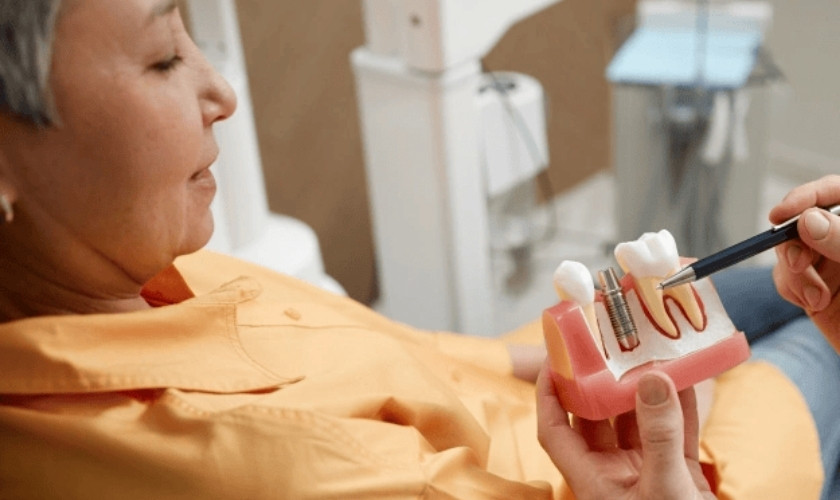
After getting new bone-anchored restorations placed, your mouth suddenly navigates new shapes, surfaces, and sensations. Your tongue, lips, and jaw have been producing sounds the same way your whole life. Now the physical landscape has shifted, and your mouth needs time to recalibrate.
The adjustment is not a sign that something is wrong. It is your oral system doing what it naturally does, adapting. Common sounds that feel different at first include:
- S sounds: These require precise tongue placement close to your upper arch. New posts or crowns can temporarily shift where your tongue naturally rests.
- Th sounds: These involve the tongue touching the back of the front teeth. Any change to that surface directly affects this sound.
- F and V sounds: These rely on the upper teeth connecting with the lower lip. A new crown edge or abutment height can briefly alter this interaction.
- Air leakage sounds: If the crown or bridge sits slightly different from your natural tooth, small gaps may cause a soft whistling that fades as swelling reduces.
What Causes This Lisp, and How Long Does It Usually Last?
The speech change after getting tooth implant treatment and permanent crowns placed comes down to three main factors. Understanding them makes the whole experience a lot less stressful.
New Spatial Geometry In Your Mouth
Your natural teeth had a very specific size, angle, and surface texture. Even a millimeter of difference in crown placement can temporarily change where your tongue goes when forming words. This is especially true for sounds that require your tongue to touch or hover near the front and side teeth.
Post-Procedure Swelling And Sensitivity
In the first few days after placement, soft-tissue swelling around the surgical site alters the internal dimensions of your mouth. This alone can make your voice sound slightly different even to yourself. As the gum heals and swelling goes down, your mouth returns to its natural proportions, and speech clarity returns.
Muscle Memory Reset
Your tongue, cheeks, and jaw use years of muscle memory to produce sounds automatically. New prosthetic teeth disrupt that pattern. However, the oral muscles adapt remarkably fast. Most patients in Portland who follow through with active speech practice see significant improvement within two to four weeks.
It is also worth noting that the quality of the procedure’s planning and execution plays a major role. Proper crown size, bite alignment, and abutment positioning all directly affect how easily your tongue can return to its natural speech pathways. That’s why choosing a well-known dental care office is important, not just for the surgical results but for your overall experience and peace of mind.
Can You Speed Up The Adjustment Process?
Your speech system responds to deliberate practice the same way your muscles respond to exercise. You do not have to wait and hope. You can actively train your way back to natural speech.
- Read out loud daily: Pick a book, a news article, or a podcast transcript. Spend ten to fifteen minutes reading aloud each day. Focus on slow, intentional pronunciation. Portland has an incredible library system, and the Multnomah County Library gives you digital access to thousands of texts you can read along with.
- Practice problem sounds in isolation: If your S sounds feel off, repeat words that are heavy in that sound. Sip, say, soft, sense. Do this in front of a mirror so you can watch your tongue placement and make small adjustments.
- Slow your speaking pace: Fast speech in the first few weeks adjusts harder. Give your tongue more time to find the new coordinates. Most people notice their speech sounds more natural when they slow down even slightly.
- Sing along to music: Singing naturally trains articulation and rhythm. Even humming along while you drive helps your oral muscles reconnect with familiar speech patterns.
- Stay hydrated: A dry mouth makes speech adjustments harder. Keep water nearby and take small sips throughout the day, especially during talking-heavy activities.
When Should You Be Concerned About The Speech Change Lasting Too Long?
If the speech change persists beyond the four-week mark or causes significant daily frustration, visit a dental office for a follow-up check. A quick assessment of your bite alignment and crown fit can determine whether a minor adjustment is needed. Here is when you should seek help:
- Pain when speaking or chewing: This is not part of a normal adjustment and should be addressed promptly.
- Your bite feels uneven: If your upper and lower teeth are not meeting evenly, the crown may need a small occlusal refinement.
- Speech shows no improvement after six weeks: While uncommon, some patients benefit from a session or two with a speech language pathologist, especially if the prosthetic restoration replaced several front teeth.
- You feel the crown is too large or the abutment height feels off: These are legitimate concerns and are easily addressed with a simple adjustment appointment.
It is also helpful to understand that patients who have had multiple missing teeth replaced tend to need a slightly longer adjustment period than those who have had just one replaced. The more the internal oral landscape changes, the more recalibration your speech system requires. This is normal.
Does The Type Of Restoration Affect How Long This Takes?
Yes, the type of prosthetic restoration you received can influence the adjustment timeline. Here is a brief breakdown that can help explain why your experience differs from what you read online.
- Single crown replacement: Usually the shortest adjustment. One tooth is replaced, and the tongue adapts quickly. You may notice little to no speech disruption after the first week.
- Bridge supported by posts: Slightly longer adjustment, particularly if the bridge spans front teeth. The tongue needs more time to map around the larger prosthetic surface.
- Full arch restoration, like All on 4 or All on X: This involves the most significant change to the internal oral geometry. Patients often experience a more noticeable adjustment phase that can last four to six weeks. Active practice with tongue placement and articulation exercises makes a meaningful difference here.
- Upper arch restorations versus lower: Upper arch placements tend to affect speech more directly because the palate and upper front teeth play a central role in producing most consonant sounds.
Ready To Speak Confidently Again? Here Is Your Next Step
A short period of speech adjustment after your permanent restorations is not a setback. It is a natural part of the healing process, and with the right exercises and a little patience, it resolves completely. Your investment in tooth implant treatment was a decision for your long-term health, confidence, and quality of life.
At our practice, City Dental, Dr. Rusty Crofts and Dr. Yu Han take pride in walking patients through every phase of recovery, including the speech adjustment phase. We do not just place your restorations and send you on your way. We make sure you leave every appointment feeling informed, supported, and confident in what comes next.
If you are currently in the adjustment phase with implants and have questions about how your healing is progressing, or if you are considering dental implants for missing teeth and want to know what the full recovery experience looks like, we are here to help. Book an Appointment today and let our team guide you through the entire process. Call us at 503-227-2883 and take the next step toward a fully restored smile and a voice that feels like yours again.
Frequently Asked Questions (FAQs)
Q. What should be expected during the adjustment period after getting tooth implants?
The adjustment period after getting tooth implants varies by individual but typically lasts a few weeks. Patients may experience swelling, mild discomfort, and changes in speech as the mouth adapts.
Q. Can a lisp be caused by poorly placed dental restorations?
A lisp may occur if the new restoration is slightly misaligned, thereby affecting the tongue’s positioning. Consulting with our dental professional can help address and adjust any issues to restore normal speech.
Q. How can speech therapy assist after getting tooth implants?
Speech therapy can be beneficial for retraining the tongue and mouth muscles. A speech therapist will guide patients through exercises to improve clarity and eliminate speech changes caused by dental restorations.
Q. Are there exercises to help improve speech after getting dental implants?
Yes, practicing specific mouth and tongue exercises can help regain normal speech patterns. Regular practice of these exercises, as recommended by professionals, can reduce any speech issues such as lisps or unclear pronunciation.
Q. Can speech difficulties be a sign of an implant failure?
Speech issues, such as persistent lisps, can sometimes indicate that the implant is not positioned correctly. If speech problems persist, it’s important to consult a dental professional for an evaluation and potential adjustments.