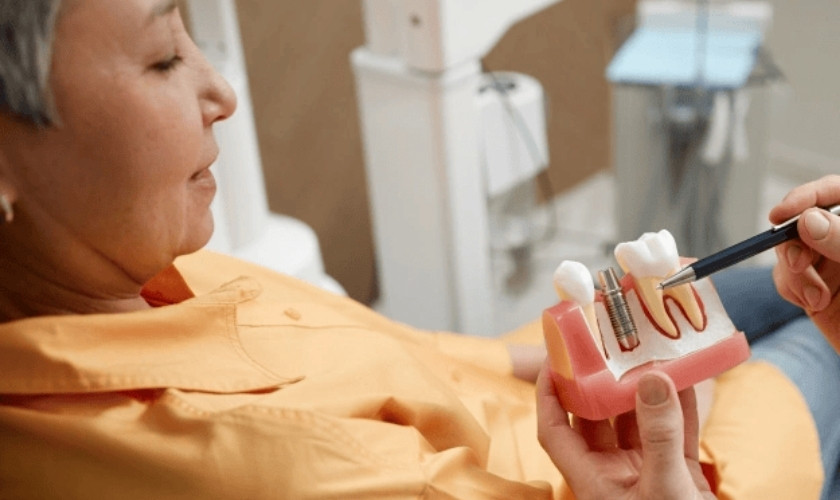


Implants are among the most dependable and durable options for replacing missing teeth. They restore not only your smile’s appearance but also its full function, allowing you to eat and speak with confidence.
However, your diet after surgery plays a critical role in ensuring a smooth recovery and proper integration of the implant with your jawbone. Therefore, to know exactly what and how to eat after your procedure so you can heal quickly and comfortably, read this blog till the end.
How Can You Safely Progress Your Diet After Dental Implant Surgery?
Eating the right foods at the right time is key to a smooth recovery. Read on for a complete stage-by-stage plan to protect your implant and promote healing.
Stage 1: Immediately After Surgery (First 24–48 Hours)
Focus: Protect the implant site and minimize irritation.
During the first two days, stick to liquids and very soft foods to avoid putting pressure on the surgical area.
Recommended options:
- Liquids: Water, milk, protein shakes, clear broths
- Soft foods: Applesauce, yogurt, pudding, mashed potatoes, lukewarm soups
Tips:
- Avoid hot or spicy foods that could irritate the gums.
- Do not use straws. Suction may dislodge the blood clot, delaying the healing process.
Stage 2: First Week Post-Surgery
Focus: Begin gentle chewing with soft solids.
Once swelling and discomfort start to ease, you can slowly add soft, solid foods to your diet.
Recommended options:
- Scrambled eggs, mashed bananas, oatmeal
- Cottage cheese, soft pasta, and well-cooked vegetables
- Smoothies with added protein
Tips:
- Chew on the opposite side of your mouth.
- Maintain gentle but thorough oral hygiene, following your dentist’s instructions.
Stage 3: Two to Six Weeks Post-Surgery
Focus: Transition to semi-solid foods while protecting the implant.
By this stage, you may introduce foods that require minimal chewing, but avoid hard or crunchy textures.
Recommended options:
- Ground beef, soft chicken, boneless fish
- Steamed carrots, zucchini, squash
- Soft fruits like pears, peaches, and avocados
- Soft grains such as rice, couscous, quinoa
Tips:
- Monitor for swelling or pain. Consult your dentist if issues arise.
- Eat a balanced diet to support healing.
Stage 4: Two to Six Months Post-Surgery
Focus: Gradually reintroduce firmer foods.
If healing progresses well, our Portland experts may allow you to add firmer foods. Your progress will determine the pace.
Recommended options:
- Tender cuts of meat, tofu, tempeh
- Apples (cut into small pieces), cooked greens, roasted vegetables
- Whole-grain pasta, brown rice, slightly toasted bread
Tips:
- Chew evenly on both sides to distribute pressure.
- Keep all follow-up visits at your reliable dental office in Portland to track implant success.
Stage 5: Long-Term Maintenance (Six Months and Beyond)
Focus: Resume a normal diet, but with caution.
After your dentist confirms the implant has fully integrated, you can enjoy a wide range of foods again.
Recommended options:
- A variety of proteins, fruits, vegetables, whole grains, and dairy
- Occasional treats, avoiding overly hard candies or sticky foods
Tips:
- Brush and floss daily to protect your implant and natural teeth.
- Avoid chewing on hard objects like ice or pen caps.
Why Careful Eating Matters After Dental Implant Treatment?
Following these stages ensures your implant heals properly and lasts for years. The bone and gum tissue surrounding the implant require time to strengthen and stabilize. Therefore, eating harder foods too early could compromise your results.
By working closely with your dentist and sticking to this recommended dietary approach, you will enjoy a smoother recovery. This will also contribute to long-term success with your new smile.
Recovering from dental implant surgery is a gradual process that requires patience, proper oral care, and a mindful diet. By following each stage in this guide and listening to your dentist’s advice, you’ll protect your investment and enjoy the benefits of a strong, healthy smile for years to come.
If you have any concerns or need personalized dietary advice during recovery, contact our team today. Book your appointment to get reliable guidance for a smooth recovery. Experience a hassle-free tooth replacement procedure with utmost comfort.
FAQs
1. How long before I can eat normally after dental implants?
Most patients can return to a normal diet after 4–6 months, depending on healing.
2. Will I need to adjust my oral hygiene after implants?
Yes, use gentle brushing and flossing around the implant site, especially during healing.
3. What foods should I avoid long-term?
Very hard, sticky, or chewy foods that could damage the implant or crown.