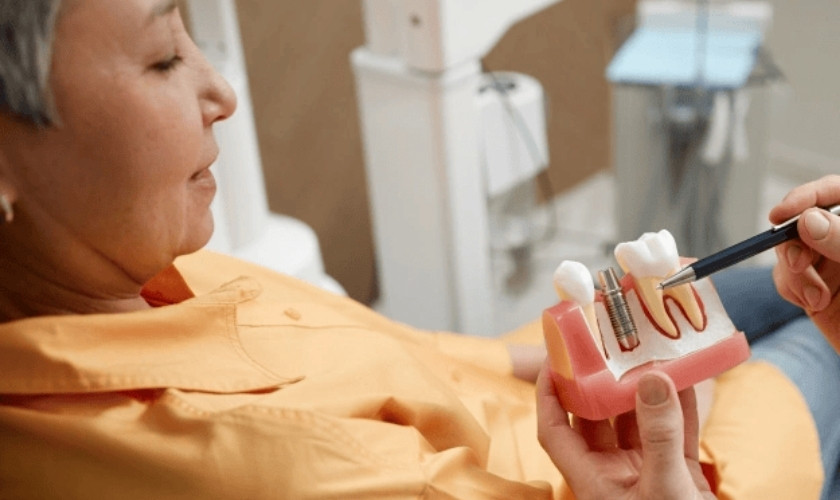


Implant-supported dentures are an advanced solution for replacing missing teeth, providing exceptional stability, comfort, and improved oral health compared to traditional dentures. They use dental implants as anchors, making them ideal for those seeking reliable and long-lasting dentures with a natural look and feel.
What Are Implant-Supported Dentures?
Implant-supported dentures are a modern alternative to traditional dentures that provide greater stability, comfort, and function. Unlike conventional dentures that simply rest on your gums, these dentures are anchored to small titanium posts – called dental implants – that are surgically placed into the jawbone.
The implants act as artificial tooth roots, securely holding the denture in place. This means no more slipping, shifting, or relying on adhesives. Depending on your needs, implant-supported dentures can be removable (snapping on and off the implants) or fixed (permanently attached and only removable by a dentist).
By combining the full coverage of dentures with the strength of implants, this treatment not only restores your ability to eat, speak, and smile with confidence but also helps maintain jawbone health and facial structure.
How Do Implant Dentures Work?
The process begins with placing dental implants into your jawbone, acting as artificial tooth roots. After healing and osseointegration, which allows the implant to fuse with the bone, custom dentures with specialized connectors are attached. There are two main styles:
- Fixed implant-supported dentures: These remain permanently attached and can only be removed by a dentist.
- Removable implant retained dentures (snap-on): These can be snapped on and off by the patient, making cleaning easier while still offering outstanding stability.
Benefits of Dentures With Implants
Choosing dentures with implants offers substantial advantages:
- Enhanced stability: Secure fit with no slippage or movement.
- Improved chewing function: Eat a wider variety of foods comfortably.
- Preservation of jawbone: Prevents bone loss and facial collapse common with traditional dentures.
- Increased comfort and confidence: No more sore spots or irritation from loose dentures.
- Natural appearance: Restores facial structure and provides an attractive, youthful smile.
How to Care for Your Implant-Supported Dentures
Caring for your implant-supported dentures is essential for long-lasting results. Brush twice daily with a soft-bristled toothbrush and use floss threaders or interdental brushes to clean around implants. If you have removable dentures, soak them nightly in a denture cleaner. Avoid hard or sticky foods that may damage the restoration, and rinse after meals to keep your mouth fresh. Regular dental visits are crucial for professional cleanings and to ensure implants remain healthy. If you notice discomfort, looseness, or gum irritation, see your dentist promptly. With proper care, dentures with implants can provide years of confident smiles.
Are Implant-Supported Dentures Right for You?
Not everyone is a candidate for implant-supported dentures. Factors like bone density and oral health are important; a consultation with our dentists can determine if this treatment is suitable. Most patients with missing teeth or those dissatisfied with loose traditional dentures experience life-changing improvements in oral health and quality of life.
Visit our dental office in Portland to discuss your eligibility and options for implant dentures. Modern dental technology means that even patients with greater bone loss may still qualify for treatment with advanced implant techniques.
FAQs
1. What is the difference between implant-retained dentures and traditional dentures?
Unlike traditional dentures, which rely on suction or adhesive, implant-retained dentures attach to implants, preventing slipping or movement, resulting in improved chewing and speech.
2. Who is a good candidate for implant-supported dentures?
Patients with sufficient jawbone density and good oral health are ideal candidates. A dentist evaluates for bone health and overall suitability before recommending treatment.
3. Is the implant placement process painful?
The procedure is done under local anesthesia, making it pain-free during surgery. Post-operative discomfort is generally mild and manageable with medication.
4. How long does the entire implant-supported denture process take?
Treatment can take several months as it involves implant placement, healing time for integration with the bone, and final denture fitting.
5. How do I care for implant-supported dentures?
Maintain good oral hygiene with regular brushing and flossing around implants, and keep the dentures clean. Regular dental visits are essential for professional maintenance.